The groove determines the compression, fill level and service life of an O-ring seal. We answer the ten most important design questions, from the groove shape and the optimal compression to the special handling of PTFE O-rings.
Luke Williams
Lord Of The O-Rings·NH O-RING Academy
Updated June 20268 min read
Key Takeaways
The groove controls the compression of the O-ring and protects it against overstretching and pinching.
Three basic shapes: the rectangular groove as the standard, the trapezoidal groove for hard O-rings, the triangular groove for hygienic applications.
Standard O-rings are compressed by 15 to 30 %, FFKM by 10 to 20 %, dynamic seals by 5 to 25 %.
After compression, 15 to 20 % free space should remain so that the O-ring can expand when heated.
Table values apply to air at room temperature. The medium and temperature can change the design.
Last updated on 22 June 2026 · Author: Luke Williams, “Lord Of The O-Rings”
What an O-ring groove has to achieve
An O-ring groove is a specially shaped recess in which the O-ring sits in order to seal two components against each other. The groove determines how the round cross-section is compressed and at the same time protects the O-ring against overstretching and pinching. It therefore creates a precisely dimensioned space in which the O-ring builds up its sealing force without being damaged.
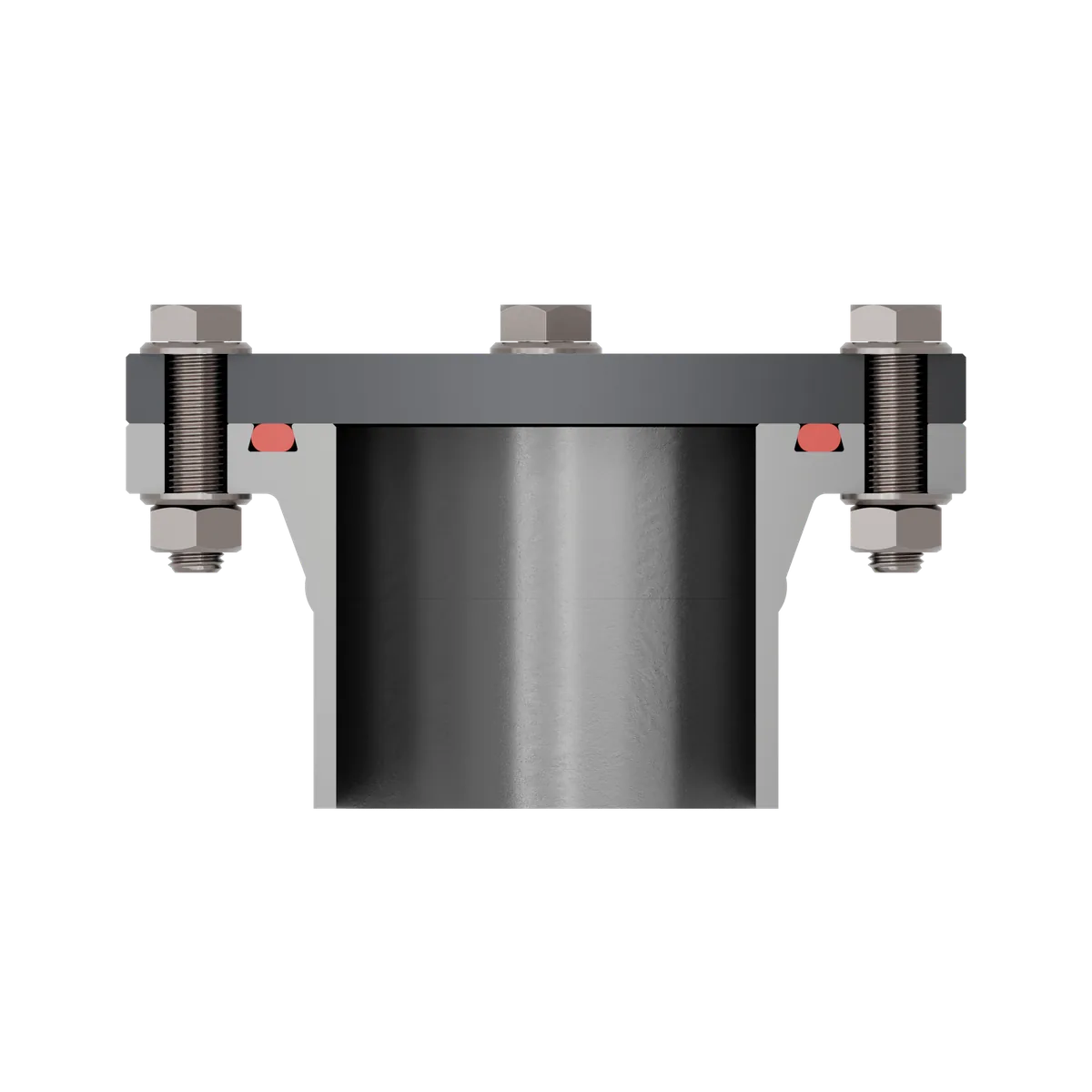
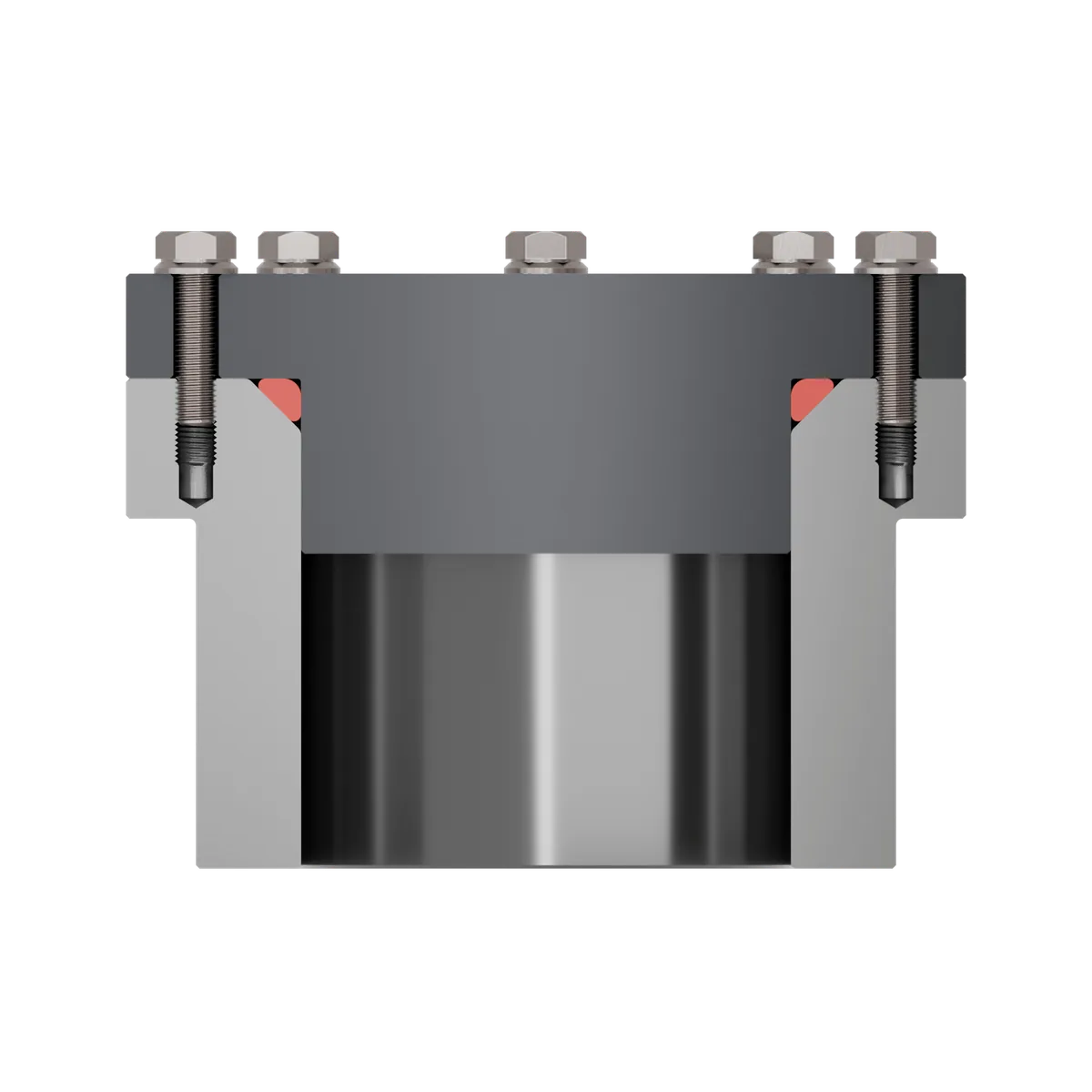
Rectangular grooveStandard case, economical to produce by turning or milling.Trapezoidal grooveHolds the O-ring in position like a dovetail.Triangular grooveThree contact faces, for flanges, covers and tight installation spaces.
For this to succeed, the groove dimensions must match the O-ring size and the application. In practice, three basic shapes have become established: the rectangular groove as the universal standard shape, the trapezoidal groove for adapting to the Shore hardness, and the triangular groove, which fills the available space almost completely. You will find an overview of shapes, dimensions and applications under O-ring grooves.
Rectangular groove
Standard shape, universally applicable. Simple design and effective sealing for many applications.
Trapezoidal groove
Matched to the Shore hardness. For hard O-rings with 90 Shore A, the width is chosen slightly larger to allow compression without excessive stress.
Triangular groove
Fills almost 100 % of the space. No gaps for bacteria or deposits, ideal for hygienic or sterile applications.
Getting compression and fill level right
Compression describes how strongly the O-ring cross-section is squeezed together in the groove. For standard O-rings, the recommended range is between 15 and 30 %. FFKM O-rings are compressed slightly less at 10 to 20 %, while for dynamic seals the range runs from 5 to 25 %. The O-ring groove calculation shows how to convert these values into concrete groove dimensions.
O-ring groove dimensions at a glance
Groove width and groove depth per cord thickness for flange, piston and rod seals, static and dynamic.
The fill level is at least equally important. After compression, roughly 15 to 20 % free space should remain in the groove. This may seem like a lot at first, but it is decisive: O-rings increase in volume as the temperature rises and need room to expand. If this free space is missing, an impermissibly high pressure builds up that can damage the O-ring. The O-ring design goes into more detail on how compression, material selection and installation situation interact.
O-ring type
Recommended compression
Free space in the groove
Standard O-rings
15-30 %
15-20 % after compression
FFKM O-rings
10-20 %
15-20 % after compression
Dynamic sealing
5-25 %
15-20 % after compression
Frequently Asked Questions
What are O-ring grooves?
O-ring grooves are specially shaped recesses in which O-rings are placed in order to create a seal between two parts. They are decisive for the efficiency of the seal, as they protect the O-ring against overstretching and pinching by providing a precise space to house it. The design of the groove must be precise so that the O-ring can exert a suitable sealing force under compression without being damaged. The groove dimensions depend on the O-ring size and the field of application.
What types of O-ring grooves are there?
A distinction is mainly made between the rectangular groove, the trapezoidal groove and the triangular groove. Rectangular grooves are the standard shape and offer a simple, effective seal for a wide range of applications. Trapezoidal grooves are advantageous when the Shore hardness of the O-ring has to be taken into account. For an O-ring with 90 Shore A, it is recommended to choose the width of the trapezoidal groove slightly larger to allow adequate compression without excessive stress. Triangular grooves fill almost 100 % of the space. This eliminates gaps for bacteria or deposits and makes them particularly suitable for hygienic or sterile applications.
Where are O-ring grooves used?
O-ring grooves are widely used in many industries where reliable sealing is required. They are used in the automotive industry for engine and transmission seals, in aerospace for hydraulic systems, in medical technology for devices that carry liquids or gases, and in general mechanical engineering and the process industry. They are also indispensable for sealing under high pressures and temperatures in water-carrying systems and in the oil and gas industry.
What compression is optimal for O-rings?
The optimal compression varies depending on the application and material type. For standard O-rings, the recommended compression range is between 15 and 30 % in order to ensure efficient sealing. For FFKM O-rings, a slightly lower compression rate of 10 to 20 % is recommended in order to make the best use of the special properties of the material. For dynamic seals, where the O-rings are exposed to movement, the range can be set wider, from 5 to 25 %.
How much free space should there be in the groove after compression?
After compression, there should be roughly 15 to 20 % free space in the groove in order to ensure optimal function and a long service life of the seal. This figure may seem high at first, but it is decisive so that the O-ring can expand as the temperature rises, because O-rings increase in volume as the temperature increases. Sufficient groove free space is essential particularly in applications close to the maximum temperature limit, for example with FKM, which can be used up to 200 °C.
How high may the O-ring stretch be in the short and long term?
The permissible stretch varies depending on the material and operating conditions. For standard elastomer O-rings, a stretch of up to 50 % is permissible during installation, while the permanent stretch should not exceed 6 %. FEP-encapsulated O-rings may only be stretched by up to 3 % during installation, with a maximum permanent stretch of 1 %. In dynamic use, the stretch should be a maximum of 3 %. Increased stretch reduces the cord thickness, which impairs the compression and thus the sealing effectiveness.
How do I design the inner diameter correctly?
The design of the inner diameter depends on the operating conditions, in particular on whether and in which direction pressure acts. Without pressure, the inner diameter is best designed to the inner diameter or centred in the groove. If the system is under pressure from the inside, the O-ring should be designed to the outer diameter, taking into account a slight compression of 0 to 3 %. This compression presses the O-ring against the groove wall and achieves an effective seal. With system pressure from the outside, the design is based on the inner diameter, likewise with a slight preload of 0 to 3 %.
How do I correctly design a groove for a PTFE O-ring?
PTFE O-rings require particular care, as their material properties allow them to be compressed and stretched only minimally. The inner diameter of the PTFE O-ring should match the groove inner diameter in order to ensure a correct fit. PTFE O-rings should preferably be used as flange seals, where the requirements for stretchability and compressibility are minimal. The groove design aims to fill the groove almost 100 % with the O-ring so that no empty spaces arise that could lead to leaks.
How are the sealing gap, system pressure and O-ring hardness related?
The relationship is decisive for the effectiveness of the seal. Harder O-rings are better suited to high pressures, as they improve the resistance to gap extrusion. As the system pressure increases, the sealing gap must be adjusted accordingly in order to ensure the integrity of the seal. At extremely high pressures, the use of back-up rings may become necessary to avoid gap extrusion. The balance is important, because O-rings that are too hard can make installation more difficult or lead to inadequate sealing.
At what temperatures and media do the table values of a groove design apply?
The values given in tables generally apply to standard conditions, that is, to use in air and at room temperature. Every specific medium and every deviation from room temperature can significantly influence the behaviour of an O-ring and place new requirements on the groove design. Different media can, due to their chemical composition, lead to expansion, contraction or chemical degradation. A changed operating temperature alters elasticity and hardness, which affects the required size and shape of the groove. We summarize the permissible tolerances of the groove dimensions under O-ring tolerances.
Request O-rings
Tell us the medium, temperature and installation situation. You'll quickly receive a quote, with no minimum order quantity and no tooling costs.
“I believe we should share our knowledge. I hope this article answers your questions about O-ring grooves. If not, feel free to contact us at any time, we're happy to help.”